Beginning in January 2013, Assembly Bill 1616 (also called AB-1616) California’s “cottage food law” enabling particular food items to be sold and made to certain individuals in certain amounts went into influence! With this page I try to distill those particular principles to answer this query: Could I market the meals I am earning in your house in California?
Listed below are a few posts to begin regardless of what condition (or condition of mind) you are in…
- What Today Food Firms Should Know To Get Cottage Food Success
- The Way to Begin a Home-Based Preserves Business
To California cottage food crafters
Keep tabs on the most up-to-date and tools around The Economies Law Center site, the people who headed this enormous bill through to victory. Read this post in Forbes (Jan. 2015) how the tens of thousands of companies the legislation has permitted to begin.
The principles are subject to change and you shouldn’t think about this blog article to function as be-all concerning the most comprehensive info. Assess the California Department of Public Health for information about law enforcement.
This Fantastic law got passed
Round the U.S., nations are recognizing the high cost of establishing a food industry in addition to inaccessibility to kitchens disagrees with regulations are avoiding most a micro-entrepreneur from getting going on a budget or even conducting a little food company to supplement their earnings.
SECTION 1 of this bill sets out the case nicely:
(3) All these health ailments are curable and preventable through lifestyle options that have ingestion of healthy foods that are fresh.
(c) For years, rural and low-income areas have faced limited chances to buy healthy foods. Frequently, without automobiles or convenient public transport choices, low-income citizens in these regions must rely on a lot of the purchasing on pricey, oily, processed foods offered at corner and convenience shops.
(d) There is an increasing movement in California to encourage community-based food creation, occasionally known as “cottage meals,” “artisanal meals,” “slow food,” “locally established meals,” or even “urban agriculture” moves. These movements want to join food into nearby communities, small companies, and ecological sustainability.
(e) Improved chances for entrepreneur growth via microenterprises can help supplement household incomes, stop hunger and poverty, and strengthen local markets.
(f) At least 32 other nations have passed legislation that enables small business entrepreneurs to utilize their house kitchens to prepare, even available, foods that aren’t potentially hazardous.
(g) Even a few bake sales are illegal in California.
(h) It is the intention of this Legislature to enact a homemade food behave especially made to help tackle those challenges and chances.
What you could make?
Non-potentially poisonous foods would be the kind that if you discovered them on your couch a month later falling throughout the cushions, so you would have the ability to eat them.
Disgusting metaphors aside, here are the facts:
114365.5. (a) The department shall adopt and post on its Web site a listing of maybe not potentially toxic foods and their cultural variations which are qualified for sale with a cabin food performance. A cabin food item will not be possibly hazardous food, as described in Section 113871.
(b ) This listing of non-potentially hazardous foods will contain, but not be limited to, each the following:
(1) Baked products with cream, custard, or beef fillings, like bread, cookies, churros, biscuits, pastries, and tortillas.
(2) Sweet, for example, fragile and toffee.
(3) Chocolate-covered nonperishable foods, like nuts and dried fruit.
(4) citrus fruit.
(5) Dried pasta.
(6) Dry baking mixtures.
(7) Fruit pies, fruit empanadas, fruit tamales.
(8) Granola, cereals, and track mixes.
(9) Herb mixes and dried mole glue.
(10) Honey and sweet sorghum syrup.
(11) Jams, jellies, preserves, and fruit butter which comply with the benchmark explained in Part 150 of Title 21 of the Code of Federal Regulations.
(12) Nut blends and nut butter.
(13) Popcorn.
(14) Vinegar and avocado.
(15) Roasted dried and coffee tea.
(16) Waffle cones and pizzelles.
This list might not be complete or entirely accurate: Since the condition accomplishes exactly what works and what does not, the listing will change, either contracting or expanding. Look in the official Approved Foods listing and watch the way to ask new foods to be inserted into the Approved Foods listing.
Accreditation Requirements
“This bill will require a cabin food functioning to Satisfy specified requirements pertaining to:
- Coaching,
- sanitation,
- prep,
- tagging, and
- permissible kinds of earnings and could subject a cabin food performance to reviews under specified conditions.”
Per Section 5 110460. No individual shall participate in the manufacture, packaging, or holding of any processed foods within this country unless the individual has a valid registration in the department, except those engaged entirely in the saving, managing, or processing of legumes. The registration will be valid for a calendar year from the date of issue unless it’s revoked. The enrollment will be transferable. This section will not apply to some cabin food operation that’s enrolled or has a license pursuant to Section 114365.
Obtain a registration number into your “Class A” cabin food performance from the regional health department which disturbs you comply with all the next. Registration amount apart, imagine being among your clients walking into your own kitchen and seeing the way you create your meals. Adhering to the Do Unto Others gold rule is a fairly great way to keep yourself in check. (Contemplating eBay sellers frequently guarantee tough, non-food products include pet free houses, the more you may keep your pets off from the own kitchen, the better).
Take a course: (d) someone who prepares or bundles cottage food items will finish a food processor course taught by the section to safeguard the public health in just three weeks of getting enrolled. The course will not exceed four weeks in length. The department will utilize the local police service to make sure cottage food operators are correctly informed of the place, date, and time of the courses provided.
Just a few kitchens will need inspections, based upon your permit: as a result of Christina Oatfield for pointing out just for Class B permits (selling directly to third parties, not customers) will a home inspection be needed, unless your local health department gets suspicions (View: Can I want to own my kitchen scrutinized?).
Utilize this legislation as the opportunity to transcend the pub in good health, fantastic hygiene, and food! You do not need to create the people ill.
Pondering: The dried beans batter fascinates me. Any idea where that came from?
ALSO READ: Business Kitchen Legal Requirements
Who will work at house business
You, household, and a single fulltime, a non-family worker paid or outstanding. You cannot create food when contagiously ill.
The fine print:
Per Part 7 113758. (b) For purposes of this part, the following definitions will apply:
(1)”Cottage food worker” means a person, paid or volunteer, who’s involved with the preparation, packaging, handling, and storage of a cabin food merchandise, or works for your cabin food performance. A worker doesn’t include an immediate relative or relative of this cabin food proprietor.
(2)”Cottage food proprietor” means a person who works a cabin food performance in her or his personal house and will be the owner of the cabin food performance.
My take: This really is a really generous supply, particularly if you’re operating a household!
The way you need to tag it
As well as following the tagging principles in 114365.2, look at after the FDA instructions for tagging allergens
(e) A cabin food performance shall properly tag all cabin food goods in accordance with the Federal Food, Drug, and Cosmetic Act (21 U.S.C. Sec. 343 et seq.). In addition, to the extent allowed by national law, the tag will contain, but isn’t restricted to, each the following:
(1) The words “Produced in a house Kitchen” at 12-point kind about the cabin food item’s main display panel.
(2) The title widely employed for its food item or an adequately descriptive name.
(3) The title of this cabin food operation which generated the cabin food item.
(4) The registration or license number of this “Class A” or “Class B” cabin food performance, respectively, that generated the cabin food item and, even in the instance of a “Class B” cabin food functionality, the title of this county of their local enforcement agency which issued the license number.
(5) The components of this cabin food merchandise, in descending order of predominance by weight, in the event the item includes two or more components.
To get non-labeled / packed items: SEC. 12. 114088. A cabin food item, as described in Section 113758, that’s served by means of a food center with no labeling or packaging, as explained in Department 114365, will be identified on the user as homemade within the menu, and menu panel, or other places that could reasonably notify a user of its residence standing.
If you are selling unwrapped biscuits at a pop-up marketplace, you would spot them as homemade through signage.
Where to whom you can sell
There are just two types of licensing which opens up chances for selling past the direct-to-consumer. As explained in Section 1 113758:
(1) A”Class A” cabin food performance, that will be a cabin food operation that can participate only in guide earnings of cabin food items in the cabin food performance or other direct revenue places explained in paragraph (4) of subdivision (b).
Here is this paragraph: (4)”Immediate sale” means trade between a cabin food performance operator along with a customer, in which the customer buys the cottage food item straight from the cabin food performance. Immediate sales comprise, but aren’t restricted to, trades at holiday bazaars or alternative temporary events, such as bake sales or meal swaps, trades at farm stands, certified farmers’ markets, or even via community-supported agriculture vouchers, and trades occurring in person from the cabin food performance.
(2) A “Class B” cabin food performance, that will be a cabin food operation that can take part in both direct sales and the indirect revenue of cabin food items in the cabin food performance, from immediate sales places explained in paragraph (4) of subdivision (b), from offsite occasions, or by a third party retail food facility described in paragraph (5) of subdivision (b).
Here is this paragraph: (5) “Indirect sale” means an interaction involving a cabin food performance, a third party merchant, and a customer, in which the customer buys cottage food items created by the cabin food performance from a third party merchant which holds a valid license issued pursuant to Department 114381. Indirect sales comprise, but aren’t restricted to, earnings made to retail stores or to retail food centers in which food might be instantly eaten on the premises.
Geographic bounds for sale
(D) (I) A “Class B” cabin food performance shall be licensed to take part in the indirect earnings of cabin food items within the county where the “Class B” cabin food performance is allowed.
(ii) A county will consent to permit a “Class B” cabin food performance allowed in a different county to take part in the indirect earnings of cabin food goods in the continent.
Just how much you can market before You Need to leave your kitchen
Per Part 7. 113758. The enterprise will not have over fifty million dollars ($50,000) in gross yearly sales from the calendar year.
My consider: Unless you’ve got a rather large margin meal, which means that you can create it for practically nothing and require a fantastic price when purchasing, e.g. $1,000 wedding cakes — sans lotion naturally — or chicken broth you won’t “get wealthy” out of the cabin food performance. The intent is to assist individuals to develop local food markets, supplement earnings, establish a marketplace for your meals, and begin.
Please check out the law.
Similar to a driver’s permit, the cabin food legislation is a privilege, not a right. Further California and other nations see this legislation functioning, the further regulations will be enlarged to permit increased places for sale, food forms, etc.
If I begin my own food company at home simply because I could?
The option is your choice and depends upon how fast you wish to increase and how well it is possible to devote your own kitchen to your small enterprise. You need to have high-quality kitchen equipment like juicers (see https://forhomekitchen.com/best-juicer-mixer-in-india/ for more info). Using your house for a food company is a massive commitment to maintaining tidy, complies, and getting room to create and save your meals. A commercial kitchen is set up and ready to proceed, together with the utilities normally covered on your hourly rate charge. For dry products, you might locate a commercial kitchen that the very ideal investment.
Contemplate the tradeoffs and then make a determination based on your specific conditions.



 When it comes to learning chess, the internet has made it possible to learn from practiced and experienced chess coaches. IchessU, for instance, offers online chess tutor services for both children and adults whether with beginner or advanced chess skills. This online platform for chess mentoring will surely help you learn the rules of chess as well as better expand your understanding of the game and your skills.


 We all want to care for the dogs that we own, and there are ways that we can actually do that. We can insure them that they will get medical attention when necessary, a hot place to live and sleep and love as we could provide, and of course we’d wish to feed them the best.
 In Royal Canin, professionals in food nutrition come together to manufacture only the best ingredients intended for the type of dog you have. They go for quality and wouldn’t want to jeopardize your dog’s health.







 Compared to motorists, cyclists are the weaker road users and are therefore legally protected. Yet they have no fool’s freedom.


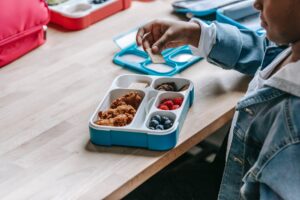 The School era is the best time for kids to learn about healthy food, bodies, and action. This is time they begin a hectic social life, have pocket money, and start to help pick their lifestyle. Kids of this age learn fast and will also be affected by their friends and popular styles.
 Compared to products-based largely businesses, which may rely on mass-marketing strategies to appeal to perspective clients for their product, law businesses should exert a much more private work in bringing clientele. This is because of the fact that there are not any observable goods getting promoted by means of a law bureau, only subjective legal suppliers.
 To discover success with all these social media web-sites, you need to to start with create a profile that’s engaging and actively take part in the flow of information. Inspire people to come up with their homework to incorporate the legal services which you’re supplying. Do not neglect to include a hyperlink pointing to a own law firm’s most important web site, or perhaps far better, a site which you’ve been sustaining. This can be a remarkably underutilized choice for online legal entrepreneurs, and
 Gamification is regarded as the use of game design components in non-game contexts, in which the components don’t constitute a fully-fledged game. Even though the term has come into general usage only quite lately, principles elements of gamification like collecting points and making badges are utilized for decades in various contexts, for example commercial loyalty applications. Visit to learn new things while gaming.

 Life is not only bestowed upon humans. It is also given to animals. We humans are alive because we take care of the lives given to us. The same thing should also be done to animals whether domesticated or not.
 Consumer Protection Laws