
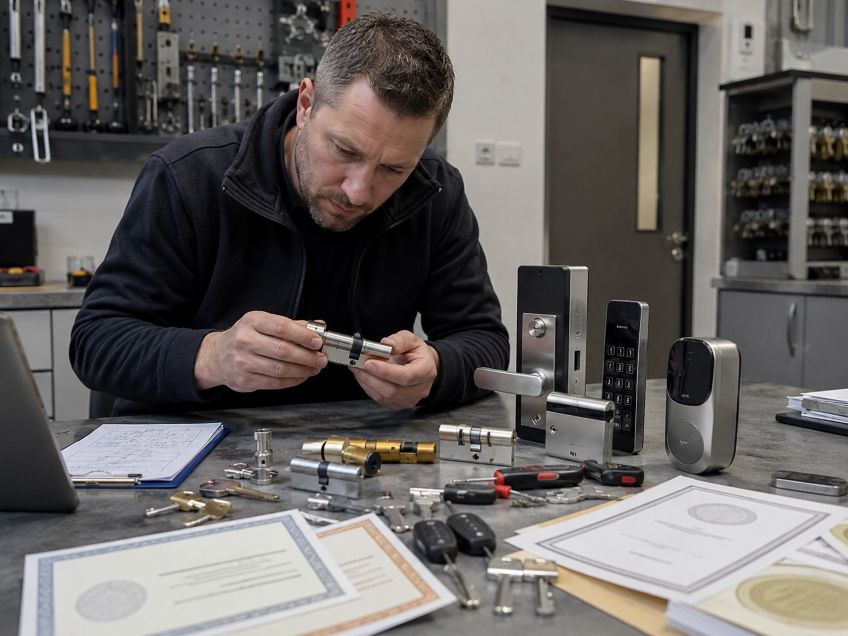
Locksmithing sits in an unusual part of the UK service economy. A locksmith may gain access to a home, replace security hardware, handle keys, and advise customers about locks, yet the occupation is not subject to a general government licensing scheme. The Master Locksmiths Association says the trade remains outside statutory licensing, while GOV.UK explains that regulated professions are those where law sets qualification, experience, or other entry requirements.
For customers, that gap is easy to overlook. Someone searching for a local lock doctor Peterborough may reasonably assume that a person advertising locksmith services has passed a recognised competence test or background check. That assumption is not always safe. Which? has warned that anyone can describe themselves as a locksmith, and its reporting has highlighted inflated prices, poor workmanship, and intimidating behaviour.
Why Licensing Appeals to Consumers
The strongest argument for statutory licensing is simple: locksmiths work directly with physical security. They may open doors, make keys, replace cylinders, fit locks, and learn how a property is protected. Supporters argue that this level of access justifies a minimum national standard.
A licence could require identity checks, criminal-record screening, training, and proof of competence before someone starts trading. It could also give consumers a public register to check before allowing a stranger into a home or business.
There is evidence that rogue trading is a real concern. Which? reported that the Master Locksmiths Association received more than 300 reports about fraudulent locksmiths in 2022, with some emergency customers charged hundreds or even thousands of pounds. London Trading Standards has also warned that thousands of Londoners are caught by rogue locksmiths each year.
Supporters can point to other security-related occupations. The Security Industry Authority licenses activities including key holding, security guarding, close protection, and public-space CCTV work. Applicants face identity and suitability checks, and some licences require approved qualifications. That shows that statutory entry controls already exist where trust and security are central to the job.
Other trades offer another precedent. The Health and Safety Executive states that businesses carrying out covered gas work must be on the Gas Safe Register. Consumers can check both the business and the individual engineer. Similar regulatory thinking can be seen in workplace safety standards, where rules may set minimum requirements when particular jobs or environments create identifiable risks. Supporters of locksmith licensing may argue that handling access to homes and security systems deserves the same kind of attention to minimum standards.
Would Licensing Create New Problems?
The opposing argument starts with proportionality. Locksmithing covers work from cutting spare keys to emergency entry, safe work, access control, and commercial security. A single statutory licence could be hard to design without making simple services more expensive or creating unnecessary bureaucracy.
A low barrier to entry can also help small businesses. People can train, gain experience, buy tools, and build a local customer base without paying for a government licence. Formal regulation could introduce fees, renewals, paperwork, and delays. Some of those costs may reach customers.
There is also an existing form of voluntary oversight. The Master Locksmiths Association operates an approval system for participating businesses. Its published requirements include vetting, inspections, and the presence of a Qualified Master Locksmith who has passed the association’s examination. The association also states that approved companies should hold suitable insurance.
That model gives careful consumers a way to check credentials without making membership compulsory. It also allows specialist organisations to update training and standards without waiting for legislation.
Regulation Does Not Automatically Remove Bad Practice
A licensing system may filter out some unsuitable operators, but it would not guarantee good service. Enforcement would matter as much as the licence itself.
The government would also need to decide who regulates the trade, what qualifications count, how often licences are renewed, and what happens to experienced locksmiths who learned through work. A system that is too weak may offer false reassurance. One that is too demanding could push legitimate sole traders out of the market.
The current consumer-protection system already provides some routes for complaints. Citizens Advice explains that suspected unfair trading or illegal business activity can be reported to Trading Standards. Yet that process usually begins after something has gone wrong. Licensing supporters focus on prevention, while defenders of self-regulation argue that better consumer education and stronger enforcement may address the problem without creating a new regulator.
Where Should the Balance Sit?
The debate is ultimately about how much formal control is justified when a trade combines practical skill with unusual access to homes and security systems. Statutory licensing could create clearer minimum standards and a simple verification route. Self-regulation offers flexibility, lower entry costs, and established trade-body checks for businesses that choose them.
Neither model removes every risk. The unresolved question is whether locksmithing now carries enough public-security and consumer-protection concerns to justify legal entry requirements, or whether stronger voluntary standards and enforcement remain the better fit. That tension is likely to stay relevant as locks, access systems, and home security become more technical.


 Korean consumer protection laws safeguard customers in unique service industries like the OP sector. Offices, or OPs, are professional businesses offering massage, skin care, and spa treatments in intimate settings designed for comfort and satisfaction. These businesses thrive in South Korea, particularly in vibrant cities like Busan, where customer trust is paramount. To maintain this trust, OP businesses must adhere to strict legal frameworks, including consumer protection and data privacy standards. This article explores how Busan’s leading OP platform ensures compliance while empowering customers to stay informed.
 Every responsible breeder provides a written agreement when selling a puppy. These documents protect both the buyer and the seller by setting clear expectations from the start. For those considering a Pomsky, a mix of Husky and Pomeranian, reading and understanding these contracts is just as important as choosing the right puppy.












 Compared to motorists, cyclists are the weaker road users and are therefore legally protected. Yet they have no fool’s freedom.









 Have you got any plans to rent your condominium such as Airbnb on term lease providers that are favorite? The town of Miami Beach might love to get a word with you if this is so. City legislation makes it possible for residents to rent miami villa rentals out on a short-term basis in areas around town, no matter where they are located with the exclusion of houses which can’t engage.
 It’d make California the first nation to get rid of the condition a suspect place fiscal bond, at a total depending on the severity of their prices, to become freed while on a trial.
 Kratom can be a natural product produced from Mitragyna speciosa, a plant native to Southeast Asia. Traditionally used as a medicinal herb, it increasingly is being used for recreational functions and remains valid and widely used in the USA.